Book Now
St. Catharines
Preventive Dentistry – St. Catharines and Hamilton, ON
How We Keep Their Smile Safe
Rather than just fixing your child’s oral health problems as they pop up (which can be expensive), our dental team takes a proactive approach using preventive dentistry. With routine appointments, we can often stop cavities, gum disease, and tooth loss before they happen, plus we can minimize existing dental issues before they turn into big, painful problems. For parents, these options for preventive dentistry in St. Catharines and Hamilton offer peace of mind and help them spend less on their child’s care. To get started, all you need to do is contact us today to schedule their next dental checkup and teeth cleaning.
Why Choose Coral Kids Dentistry & Braces
for Preventive Dentistry?
- Dental Office Led by Board-Certified Pediatric Dentist
- Dental Anesthesiologist on Staff
- Fun & Colorful Dental Office with State-of-the-Art Technology
Dental Checkups & Teeth Cleanings

Your child’s first checkup and cleaning will mostly revolve around helping them feel comfortable in the unfamiliar environment of the dental office, and once they acclimate, we can move on to examining their teeth. This allows us to monitor their oral development, address problems as they arise, and remove plaque and tartar from hard-to-reach areas before they can lead to cavities. Plus, these appointments give you and your child the opportunity to ask our team any questions you might have.
Learn More About Dental Checkups & Cleanings
Dental Sealants

The back teeth have fissures that tend to trap plaque and food particles, making them particularly susceptible to developing cavities. Just like a cracked road, we can essentially “pave over” these teeth using dental sealants, which involve applying a thin layer of tooth-colored resin to the chewing surfaces. This shields the teeth and drastically reduces the probability of decay in the most vulnerable teeth.
Silver Diamine Fluoride

You might know that fluoride can help strengthen teeth, but what is silver diamine fluoride? It is essentially a drill-free solution to tooth decay. When applied to a cavity, the silver kills the bacteria causing the damage, and the fluoride helps remineralize and preserve the enamel. This approach is quick, painless, and enables us to keep the dreaded drill safely tucked away.
Behaviour Desensitizing

Common habits like thumb/finger-sucking and tongue-thrusting can cause pressure to be applied to the incoming teeth, which can mess with their alignment and create orthodontic issues. Over time, they can also interfere with jaw growth. If you notice your child engaging in any of these behaviours, let our team know, and we’ll offer proven strategies to help them stop while minimizing stress for both you and them.
Laser Frenectomies

If a child has a lip or tongue-tie that is interfering with their ability to speak, eat, or breathe, we can remove the offending tissue quickly with a soft tissue laser. This instrument makes it easy for the doctor to work with little mouths, plus it’s able to shrink the treatment area so that the surrounding oral tissue is left untouched. This makes the procedure more comfortable and also reduces post-treatment soreness and bleeding to practically zero.
Learn More About Lip & Tongue-Tie
Pulp Therapy

Usually, if a tooth develops decay, it only affects the outer layer, or enamel. But sometimes the infection is able to reach the inner sensitive portion called the pulp. This is where the nerve of a tooth is located, and problems here can cause quite a lot of pain. With pulp therapy, we’re able to stop this pain and save the tooth by removing the infected pulp and leaving the healthy portion behind, which allows the tooth to keep functioning like normal.
Special Needs Dentistry

Ongoing preventive dental care is important for every child, but that’s particularly true for ones with special needs. Our team has a lot of experience treating patients with various physical, mental, sensory, and behavioral special needs, and because of our sedation options, we’re able to calm even the most severe dental nerves. Just give us a call, and we’ll go over how we can make sure your child’s next dental visit is a smooth experience.
Fluoride Treatment

Fluoride is a naturally occurring mineral found in many of your family’s favorite foods, as well as in water supplies like rivers, creeks, and lakes. It’s also found in many over-the-counter oral health products like toothpaste and mouthwash. Following your child’s regular dental cleaning, we can apply a fluoride topcoat to their sparkly white teeth to help strengthen their enamel in just minutes, helping reduce their risk of painful cavities between visits.
What is Fluoride?

Fluoride is truly all around you. From natural water sources like rainwater to many delicious fruits and vegetables you can grow right in your garden, this mighty mineral is even added to public water supplies and many safe, effective dental products available at your local supermarket.
Although it can be dangerous in extremely high doses, the amount used in most OTC products and tap water is perfectly safe. In fact, even if your little one swallows their toothpaste after brushing, the worst they might experience is usually just a minor, temporary stomachache. In most cases, they should only experience lasting effects if they are consuming massive quantities, such as if they regularly eat whole tubes of toothpaste!
How Does Fluoride Treatment Work?
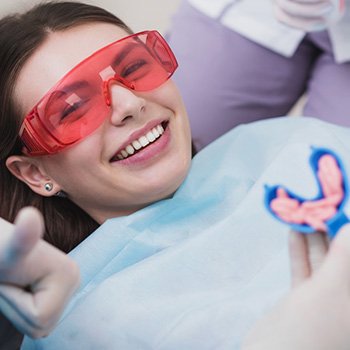
Getting a fluoride treatment in St. Catharines is safe, fast, and very easy! Following your child’s cleaning, their dentist or dental hygienist will apply a topical fluoride in the form of a gel, varnish, or foam to their teeth, where it will remain for the next 30 to 60 minutes.
The fluoride will penetrate the tiny pores in their tooth enamel, giving it an added boost of phosphate and calcium to help keep it healthy and strong and reduce the early effects of decay that may already have begun forming. Please keep in mind that this treatment cannot fix things like chips, cracks, or even cavities that have already developed.
While your child waits for their fluoride to work its magic, they’ll need to avoid eating or drinking anything, but they can resume their regular diet as soon as their 30-to-60-minute treatment time is complete.
Who Benefits from Fluoride Treatment?

Fluoride treatment in St. Catharines is an excellent choice for kids who still haven’t quite mastered proper oral hygiene on their own, as it provides an added layer of protection against cavities and decay.
It can also be extremely beneficial for kids with special needs or mobility challenges, or those who have sensitive or cavity- prone teeth.
Space Maintainers

A child’s baby teeth have many important functions, and one of them is serving as guides to ensure the adult teeth come in straight. However, if a baby tooth is lost too soon, the surrounding teeth can actually start to shift toward the gap, potentially blocking the incoming adult tooth. To stop this from happening, we can place a small space maintainer in a child’s mouth so that they won’t develop orthodontic issues down the road.